Early Life and the Call to Guardianship
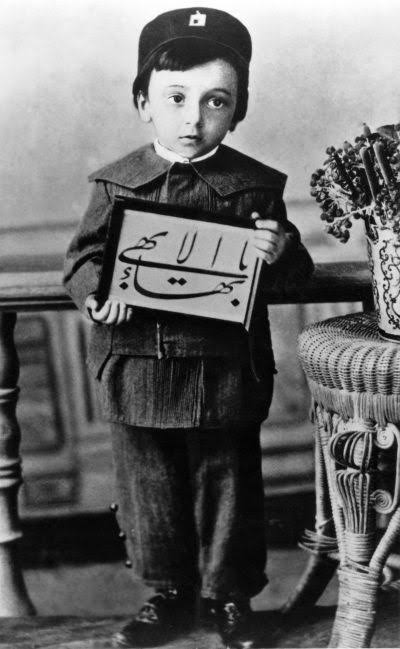
Related to both the Báb and Baháʼuʼlláh, Shoghi Effendi was born in ʻAkká on 1 March 1897, while his grandfather ʻAbduʼl-Bahá was still a prisoner of the Ottoman Empire. From his earliest years, a staunchness of faith and a deep devotion to his Grandfather motivated his every action.
Determined to serve as a secretary and translator for ʻAbduʼl-Bahá, he mastered English and, in the spring of 1920, left for Oxford University to perfect his command of the language.
When ʻAbduʼl-Bahá passed away in November 1921, Shoghi Effendi was devastated. In profound grief he learned that the Will and Testament had appointed him — at twenty-four years of age — Guardian of the Baháʼí Faith.
The Guardian’s Mandate
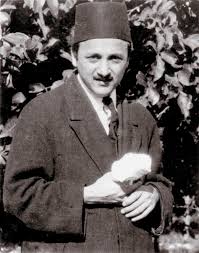
Despite his personal distress, Shoghi Effendi vigorously assumed his daunting responsibilities. He identified three “charters” that would guide his ministry: Baháʼuʼlláh’s Tablet of Carmel, mandating the development of the Baháʼí World Centre in the Holy Land; the Will and Testament of ʻAbduʼl-Bahá, outlining the framework of the Baháʼí administration; and the Tablets of the Divine Plan, charting the global expansion of the community.
With ʻAbduʼl-Bahá’s passing, the Faith entered what he called its “Formative Age” — the apostolic, heroic era had closed, and the work now was to build. His own role demanded a leadership style different from his Grandfather’s: systematic, institutional, worldwide.
In 1937 he married Mary Maxwell of Montreal, Canada — known to Baháʼís as Amatuʼl-Bahá Rúḥíyyih Khánum — whom he described as “my helpmate, my shield… and my tireless collaborator in the arduous tasks I shoulder.”
Building the Baháʼí Administration
The development of Baháʼuʼlláh’s administrative order was a major focus of the Guardian’s attention. As these institutions evolved, they would mobilize the community’s human and material resources and provide the instruments for carrying out the Divine Plan.
First came a structure of elected local and national Baháʼí institutions to administer the affairs of the growing community. Shoghi Effendi guided these nascent bodies to promote the teachings, publish literature and organize community life — all the while learning to practise the consultative decision-making prescribed by Baháʼuʼlláh.
Through thousands of letters and cables he nurtured, corrected and encouraged the institutions and the believers who served them, patiently building the machinery of a system whose foundations had been laid in the Sacred Texts.
Expansion of the Bahá’í Community
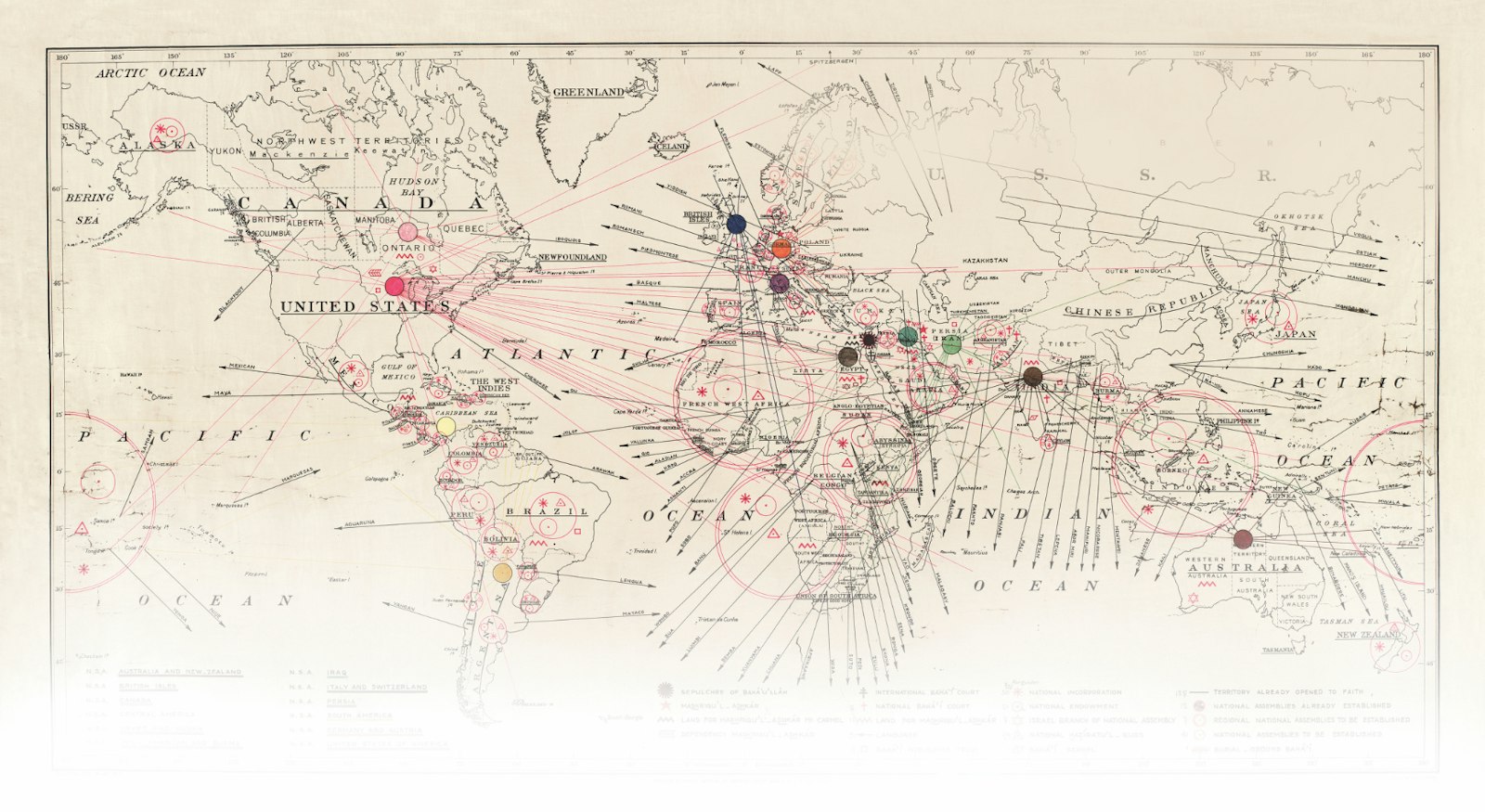
To fulfil ʻAbduʼl-Bahá’s Divine Plan — establishing the Faith in every land — the Guardian first encouraged the small band of believers to carry the message across the planet. Foremost among the pioneers was the American journalist Martha Root, who circled the globe at least four times and brought the Faith to Queen Marie of Romania, its first royal adherent.
As the capacity of the community grew, Shoghi Effendi assigned a series of systematic plans to national Baháʼí communities. In 1953 he launched what he called a “fate-laden, soul-stirring, decade-long, world-embracing Spiritual Crusade” — the Ten Year Plan.
The results were astonishing. At ʻAbduʼl-Bahá’s passing the Faith had been established in some 35 countries; by the Guardian’s own passing in 1957, Baháʼís resided in more than 250 sovereign states, dependencies and major islands. By 1963 there were 56 National Spiritual Assemblies, over 4,500 Local Spiritual Assemblies, and Baháʼís in more than 15,000 localities.
The Baháʼí World Centre

In the Holy Land, Shoghi Effendi began to construct the heart and nerve-centre of a world-embracing Faith, overcoming obstacles that often seemed insurmountable. A weighty task was safeguarding the Shrine of Baháʼuʼlláh at Bahjí and the lands around it — a work that occupied him until the end of his life.
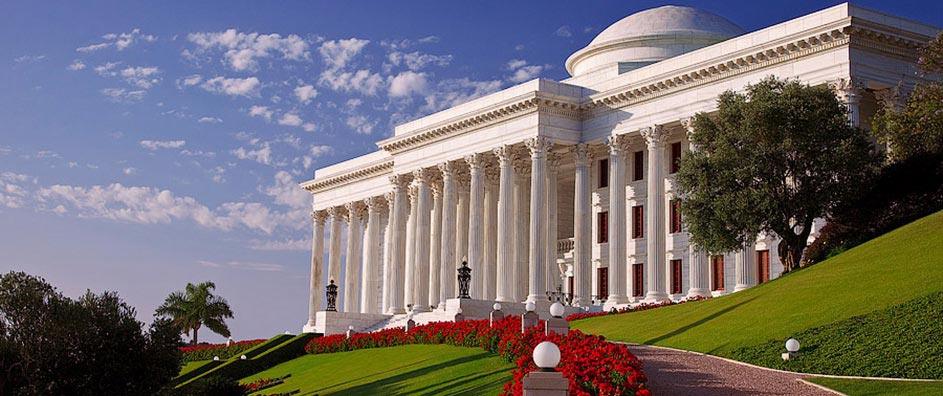
In Haifa he oversaw construction of the superstructure of the Shrine of the Báb on Mount Carmel — its golden dome became known as the “Queen of Carmel”. He laid out magnificent gardens around both Shrines, and acquired, restored and beautified the resting places of the sister, brother, mother and wife of ʻAbduʼl-Bahá.
To house the world administrative institutions, he mapped out an “arc” on the mountainside around which the international buildings of the Faith would stand. The first of these, the International Archives Building, was completed shortly before his passing.
Crises and Victories
Throughout his ministry the Guardian guided the community through successive crises: Baháʼís were persecuted in Germany under Nazi rule; believers were arrested and interrogated in Turkey; the flourishing community of ʻIshqábád was dispersed by Soviet persecution; opposition broke out afresh in Iran; and the house of Baháʼuʼlláh in Baghdad was seized.
With characteristic calm and perception, Shoghi Effendi saw the potential for triumph in every apparent crisis. When Egyptian courts delivered judgments that appeared adverse, he hailed them instead as recognition of the Faith’s independent character.
While helping the community defend its rights in national courts and on the international stage, he taught the believers to see every difficulty as an opportunity to carry forward the work of the Cause.
His Passing

Despite the enormous burden of his duties, the Guardian devoted whatever time he could spare to greeting pilgrims from East and West — encouraging them, advising them, and sharing news of the community’s progress worldwide.
In November 1957, while visiting London to purchase furnishings for the buildings and gardens of the World Centre, Shoghi Effendi passed away suddenly at the age of sixty. The Baháʼís of the world were plunged into profound grief.
His resting place is in New Southgate Cemetery in north London. Today it remains a place of prayer and reflection for visitors from every corner of the globe — a quiet monument to the man who, more than any other, shaped the worldwide community the Faith now is.